What’s going on at RHS Wisley?
I was rudely awaken by my alarm clock when it went off at 4:10am.
I was upright, showered, dressed and out of the door with Thermos flask in hand by 4:30am. My fully laden camera bag was on the passenger seat next to me and my tripod loaded in the boot of the car.
I was on my way to RHS Wisley for only the second time in my life. This time for the Garden Media Guild arranged visit in April 2026. I was fortunate to secure a place after being put on a waiting list for the event, kindly organised by Jill. I and other members of the Professional Garden Photographers Association (PGPA) had been granted special early access from 7am, hence the incredibly early departure from Birmingham. The 2 and half hour drive was punctuated only by a brief service stop to scoff my overnight oats and glug a cup or two of steaming hot coffee.
Upon arrival I got lost circling around the giant, empty car park but was eventually greeted just after 7am at the main entrance by writer Jill Anderson who had organised the visit on behalf of the GMG and, Liz Woznicki RHS Director of communications who would be coordinating the day. After a brief natter about how great the potted tulips by the entrance looked I was guided through the old laboratory building into the gardens and was instantly taken aback by the scale and diversity of the gardens.
I’d planned ahead and knew I wanted to head to the box hedge trials in the Walled Garden as well as Oakwood but my plans were sidetracked as I was drawn like a magpie to all the shiny things. There were small Acers being kissed by soft morning light in the Alpine Meadow, Wisteria brachyborys - 'Showa-beni' blossoming in the warm side light and tulips everywhere, but especially lining the Jellicoe canal. So my best laid plans to stay calm and focussed on a few areas went straight out of the window as I dashed from place to place.
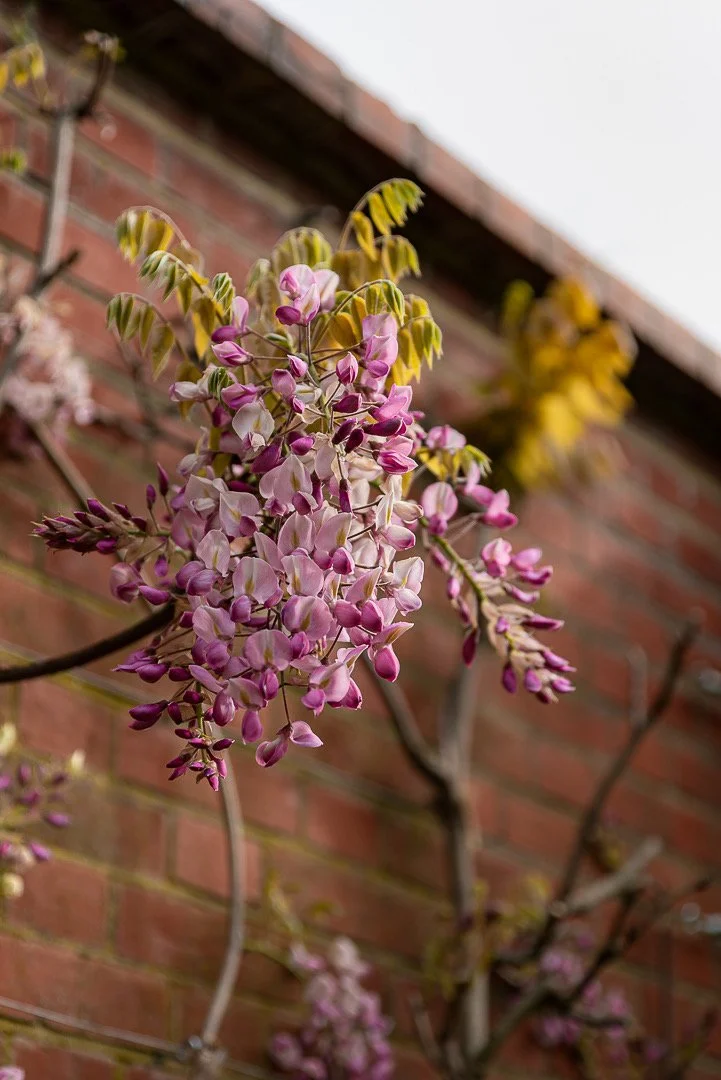
Wisteria brachyborys - 'Showa-beni'
I had a quick word with myself and get back on with my initial plan, spending some time by the Japanese pagoda in 7 Acres, taking in the vibrant acid greens of the Acer negundo - ‘Winter lightning’ and woven willows, underscored by deep hues of the Spanish bluebells.
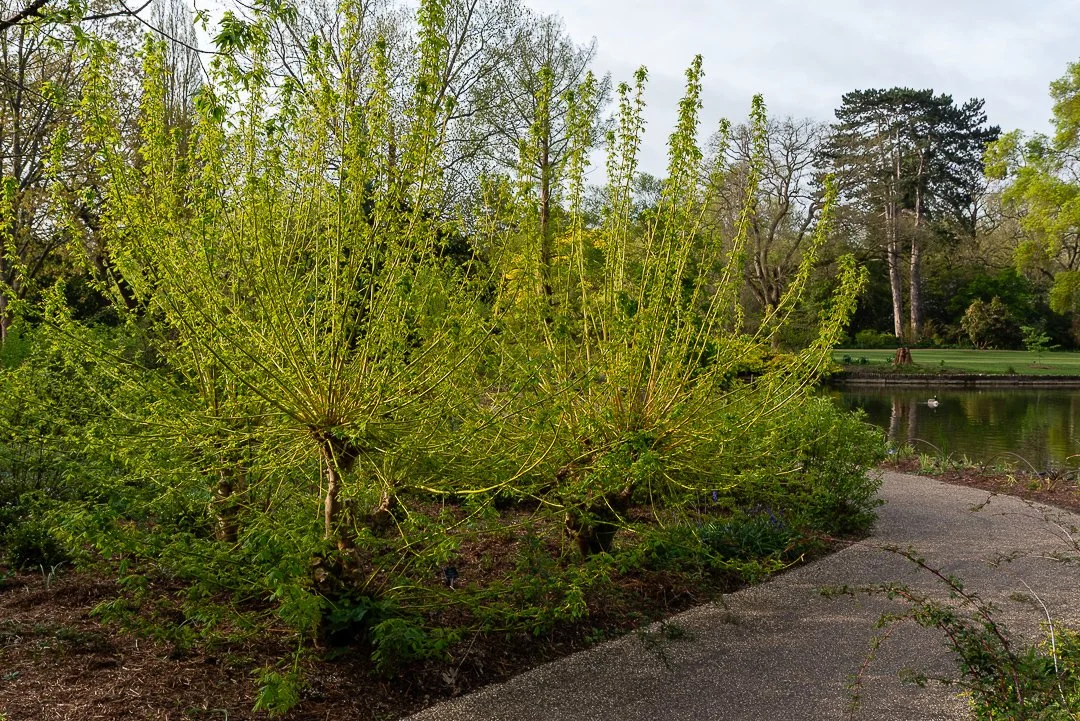
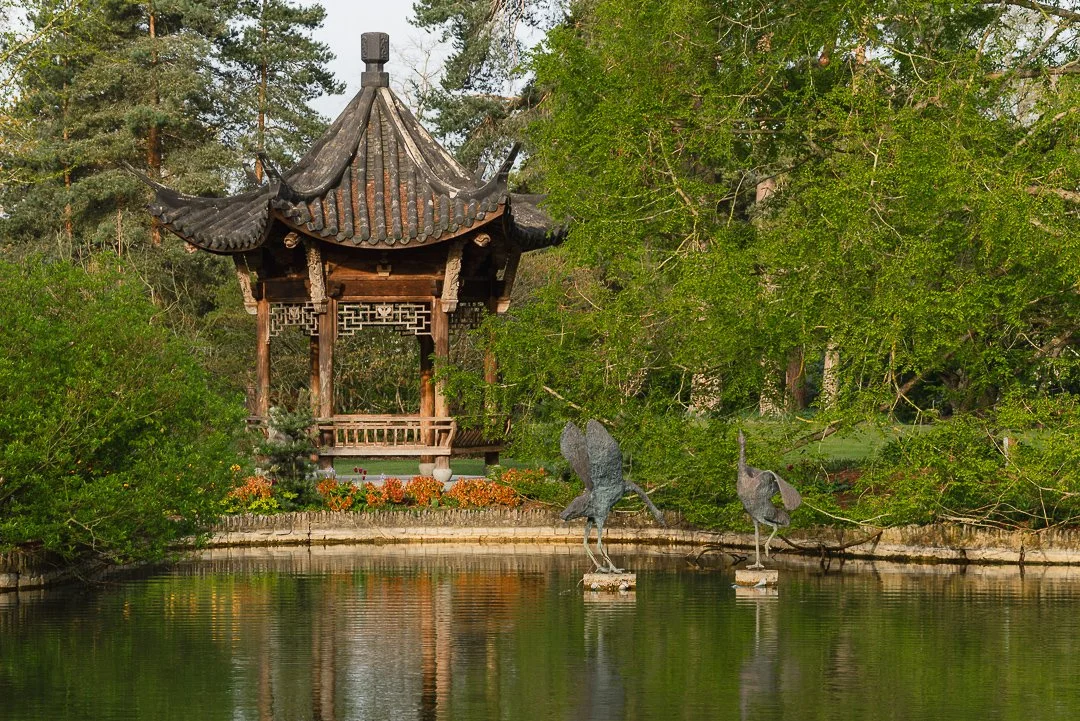
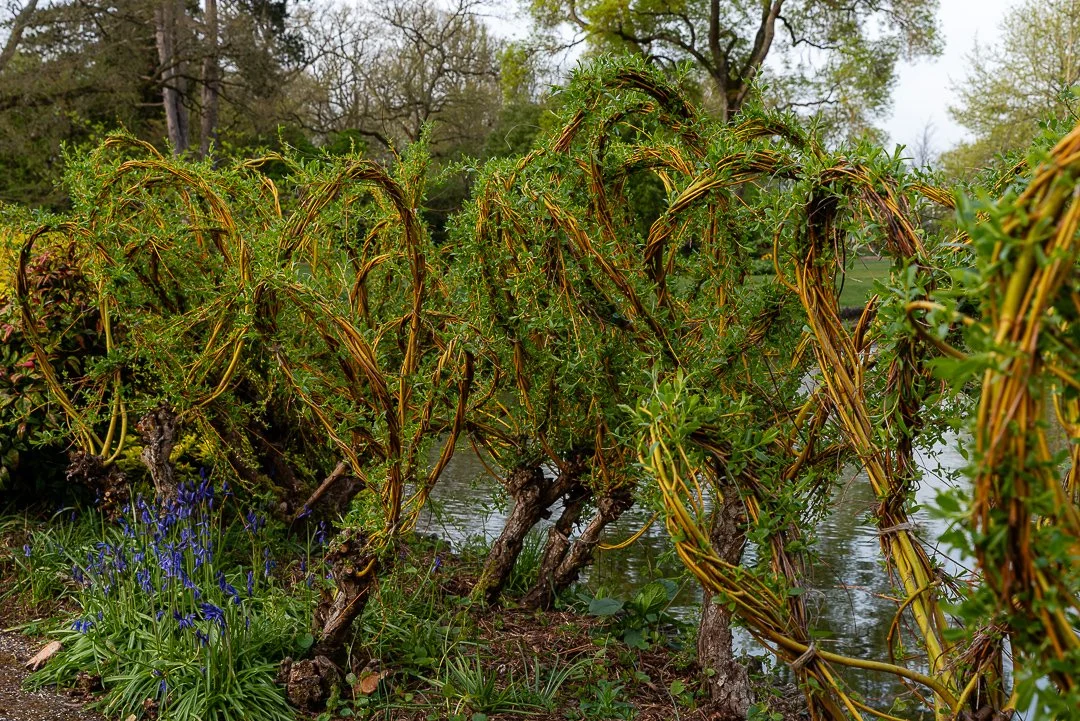
For some of the time the sky was overcast and the light rather flat and uninspiring. That said, this did give me the opportunity to bust out my graduated ND filters to balance the exposures of the bright skies and darker foregrounds. When the sun did occasionally broke through, it provided some pleasant warm tones to my images. Such as these ones of the pagoda and nearby giant redwood in the 7 Acres area of the garden. Meandering through Oak Wood was also a joy, with camellias, rhododendrons and bluebells all in bloom.
I was lucky to have found my way back to the walled gardens and Water lily pavilion just before a brief downpour, where I met PGPA member Nicky Flint (@sussexstills). We waited out the shower under the shelter of the pavilion and caught some sun breaking through the clouds over the diverse array of alternative hedging. It was quite the decorate array of buxus alternatives; Ligustrum, Osmanthus, Euonymus, Lonicera, Berberis and Taxus to name just a few.
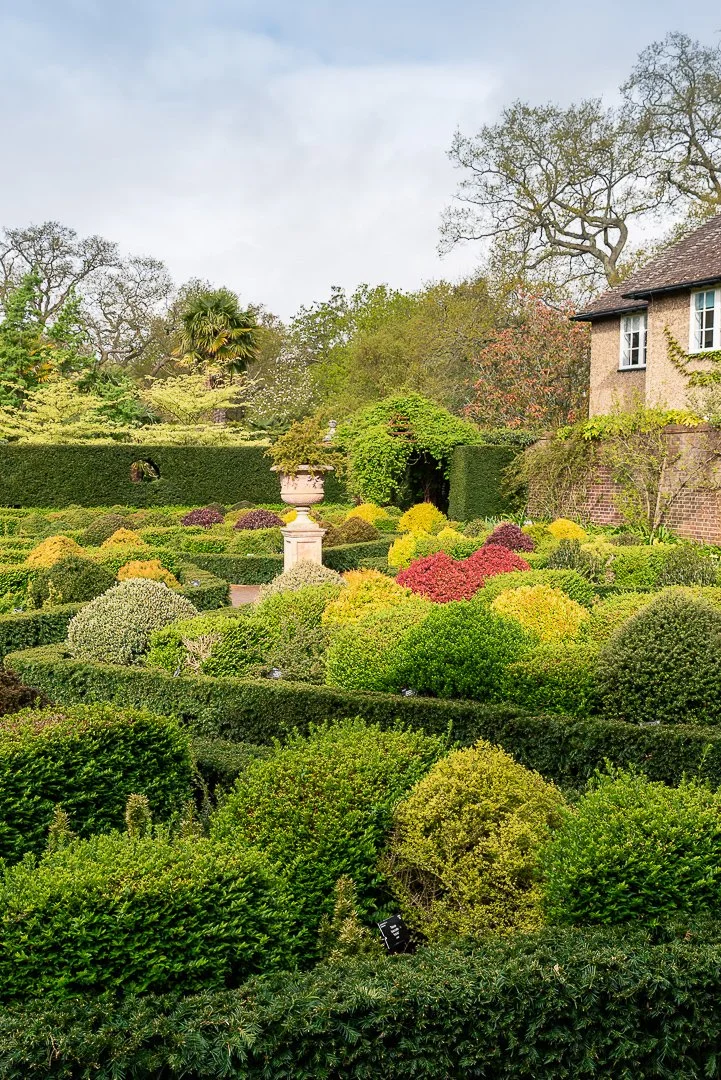
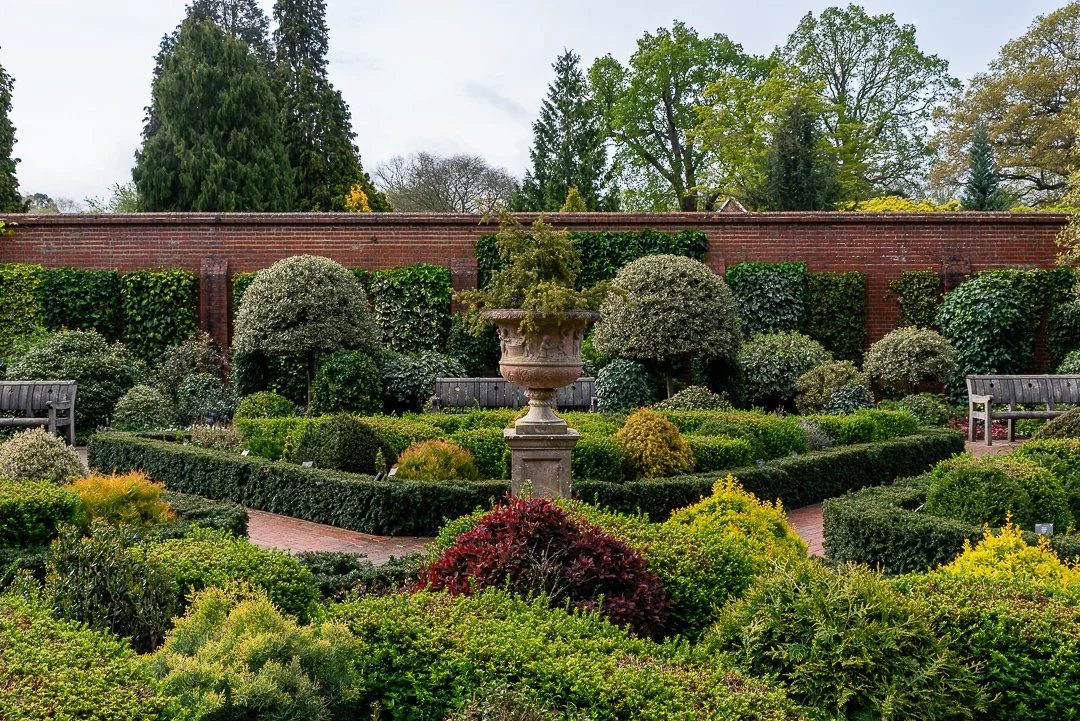
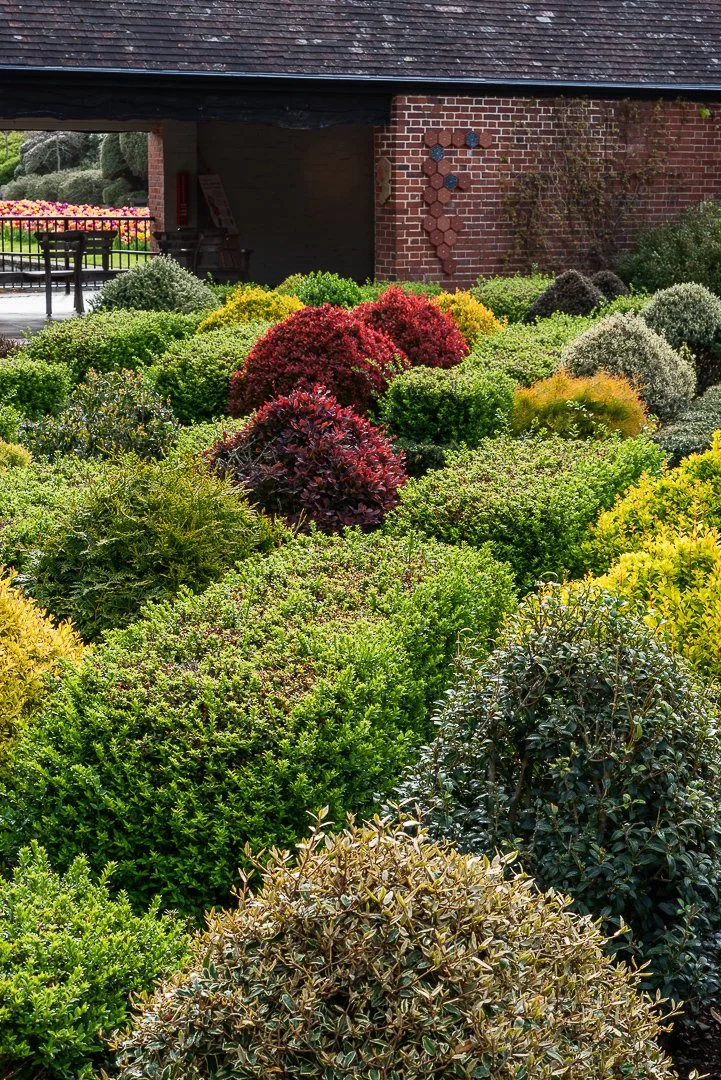
Not long after this, having spent time admiring the jewel like colours of the tulips lining the Jellicoe canal (which I later learned used to be the original propagation greenhouse),we met up with other GMG members for an introductory coffee. Fortified with caffeine and pastries, we were taken on extensive, informative tours of the garden by a range of RHS staff. I quickly learned I’d barely scratched the surface of the gardens during my early morning shoot. We took in more of Oakwood, some of the transitory ponds by the Rock Garden, the Piet Oudolf landscape (with thousands of perennials and bulbs planted over couple of years) and onwards to the Trials gardens. The staff spoke eloquently and effusively about the work they and their colleagues undertake to preserve and enhance the gardens.
During what was intended to by an extended lunch break I was fortunate to tag onto an impromptu tour of Battleston Hill, led by independent gardening expert Peter Mills and accompanied by Mark Packham. Peter passion for gardening and wildlife was infectious. Mark and I were treated to his wealth of knowledge about scented rhododendrons amongst other trees and shrubs. Peter also identified a host of insects and birds by eye and eye. We were astonished to see quite how early a lot of things had flowered this year, including the Viburnum and Paulownia.
By this time my stomach was grumbling (I’d been on the road since 4:30 after all) so we wrapped up our tour and met some other GMG and PGPA members for lunch at the Hilltop centre. Fortunately this was well located for our post lunch activities of a tour around the World Food Garden. It was a relief to hear that the RHS has ceased using any harmful chemical insecticides, instead, they use natural and manual treatments to deal with insects which may unduly harm their crops. We saw upturned terracotta pots stuffed with straw to trap earwigs, and were regaled with tales of the hours of times staff and volunteers spend removing apple ermine moth caterpillars from their young trees. They also endeavour to attract natural predators such as birds to the garden, creating a balanced ecosystem to cut down on the need for human interventions.
Our final session of the day was a tour of RHS Hilltop - ‘the home of gardening science’ by Dr Alistair Griffiths, Director of Science and Collections. This was right up my street because Alistair spoke extensively about the research the RHS have undertaken into how gardening can contribute to Wellbeing and Climate Change adaptation. We were privileged to get a peak inside their extensive, climate controlled herbarium as well as to learn about the industry leading and knowledge sharing research the RHS are doing on the transition to Peat free growing. Alistair was clearly passionate about the work the RHS are undertaking, and most importantly, about sharing that information with gardeners and those in the horticulture industry so that we can all benefit.
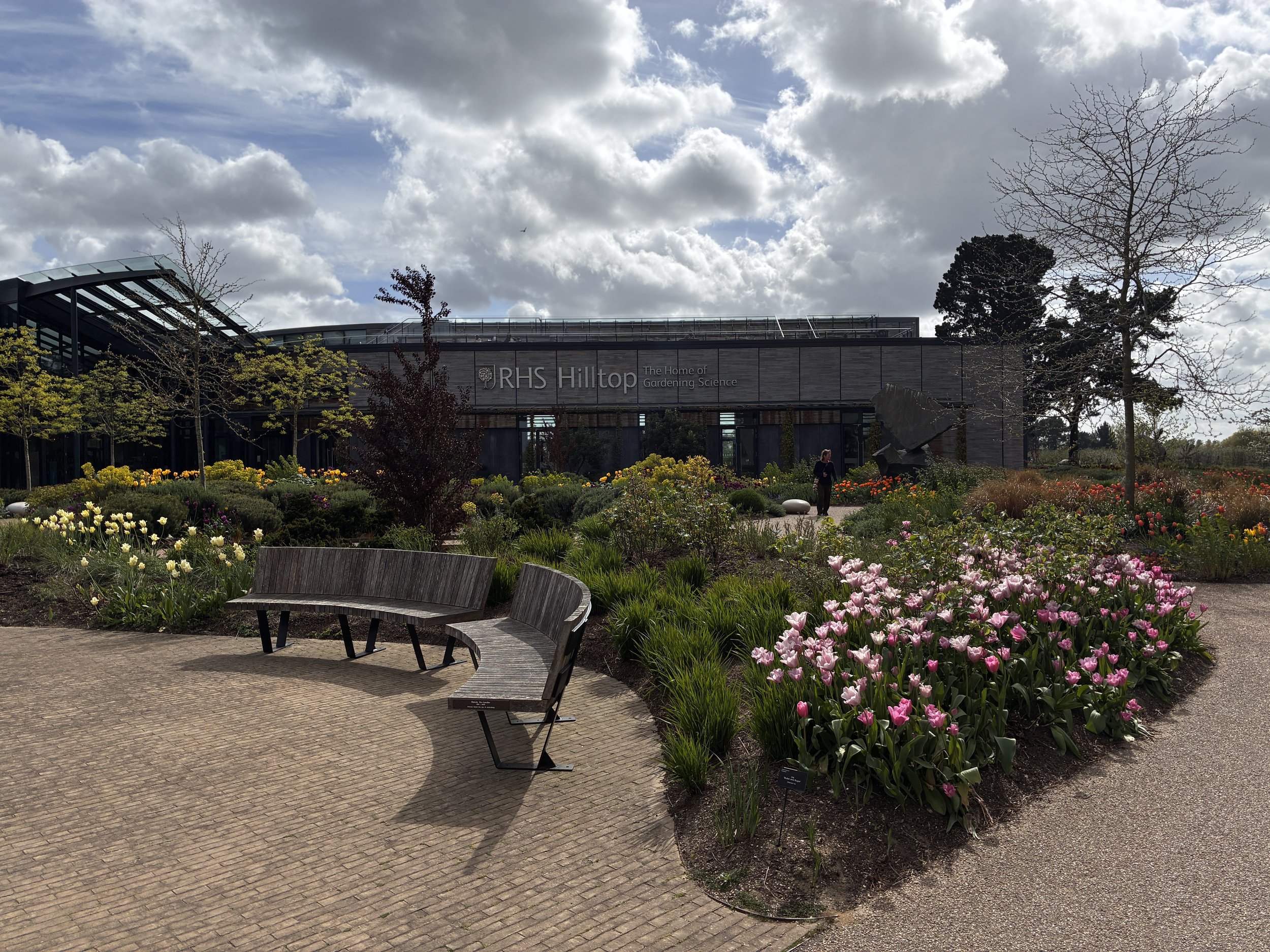
I was really fascinated to hear about the impact gardeners can make on the natural environment in terms of providing ecosystem services, such as flood reduction through water capture and storage. A lot more information about this can be found in the RHS “State of Gardening” report.
I have to say, by this late stage in the afternoon I was flagging. The day had been both visually and mentally stimulating with so many incredible vistas and so much in depth knowledge to take in. After saying my thanks and goodbyes to the other PGPA and GMG members, I hit the road to miss the worst of the M25 traffic. It was such an incredible first taste of GMG visits, the various members I met and chatted to were all so friendly and encouraging of my new career. Plus the RHS staff were all so welcoming and enthusiastic. Wisley itself was awe inspiring, I couldn’t recommend it enough as an example of gardening through the ages, from traditional cottage style gardening through to cutting edge techniques and practices for sustainability and remaining beautiful despite the effects of climate change.